


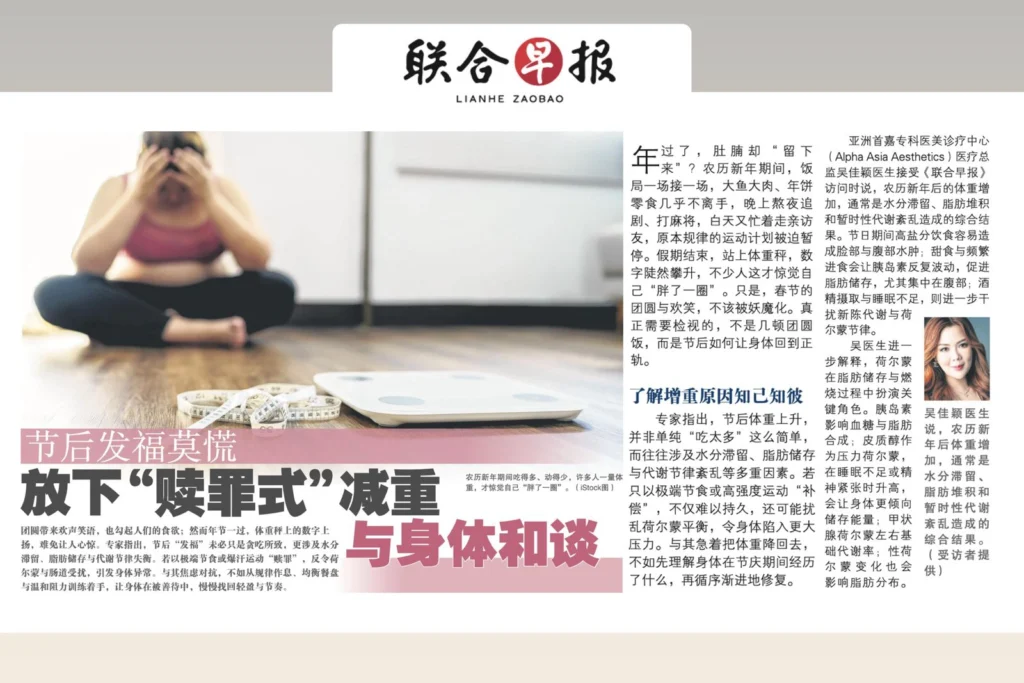
This article is adapted from a news feature published in Lianhe Zaobao and includes insights shared by Dr. Jeanel, Medical Director of Alpha Asia Aesthetics.
Festive periods are meant to be enjoyed. From reunion meals and celebratory treats to late nights and disrupted routines, it is completely normal for eating and lifestyle habits to shift during occasions such as Lunar New Year. However, once the celebrations are over, many people step onto the weighing scale only to feel alarmed by a sudden increase in weight.
While this can be frustrating, post-festive weight gain is not always simply the result of “eating too much.” In many cases, it is a combination of temporary water retention, changes in eating patterns, hormonal fluctuations, reduced physical activity, and short-term metabolic imbalance.
According to Dr. Jeanel, Medical Director of Alpha Asia Aesthetics, the body often needs time to recover after a period of indulgence. Rather than responding with extreme diets or punishing exercise routines, it is more helpful to understand what is happening inside the body and take a more balanced, sustainable approach to recovery.
After festive celebrations, some people notice puffiness in the face, bloating around the abdomen, or a feeling of heaviness in the body. This does not necessarily mean all the weight gained is body fat.
One major factor is water retention. Festive meals are often higher in sodium, especially from processed foods, sauces, snacks, and restaurant dishes. A high salt intake can cause the body to retain more fluid, leading to temporary swelling and an increase in body weight.
Another factor is frequent eating and higher sugar intake. During the festive period, it is common to snack throughout the day, consume desserts more often, and eat larger portions than usual. This can cause repeated spikes in insulin, which may encourage the body to store more fat, especially in the abdominal area.
In addition, alcohol consumption, late nights, sleep deprivation, and less movement can all affect how efficiently the body regulates energy, digestion, and recovery.
As a result, the number on the scale after the festive season may reflect a combination of water retention, digestive slowdown, and temporary metabolic changes — not just pure fat accumulation.
One of the key reasons why post-festive weight gain can feel stubborn is because of the role hormones play in metabolism and fat storage.
Insulin is one of the most important hormones involved in blood sugar regulation. When meals are frequent and high in refined carbohydrates or sugary foods, insulin levels may rise more often, encouraging the body to store excess energy as fat.
Cortisol, often referred to as the stress hormone, can also increase during festive periods due to irregular sleep, physical fatigue, emotional stress, and lifestyle disruption. When cortisol levels are elevated, the body may become more likely to retain energy rather than burn it efficiently.
Thyroid hormones help regulate the body’s basal metabolic rate, which influences how quickly the body uses energy. Meanwhile, sex hormones can also affect fat distribution and how the body responds to stress, dietary changes, and shifts in daily routine.
This means that even when festive eating ends, the body may not immediately return to its usual rhythm. Metabolism often needs time to rebalance, which is why some people do not see instant results even after trying to eat normally again.
A common mistake after the festive season is trying to “fix” the weight gain as quickly as possible. This often leads to highly restrictive eating, skipped meals, detox trends, or sudden intense exercise routines.
While these methods may seem effective in theory, they are often difficult to maintain and may place even more strain on the body.
Dr. Jeanel highlights that taking a harsh, punishment-based approach to weight loss may backfire. Excessive restriction or over-exercising can increase physical stress, disrupt hormonal balance further, and make it harder for the body to recover properly.
In some cases, these habits may even contribute to undesirable effects such as:
Rather than helping the body recover, extreme methods may push it into greater imbalance.
Instead of trying to “punish” the body after festive indulgence, a better approach is to support it gradually back to balance.
The goal should not be rapid correction, but steady recovery.
Sleep is one of the most important foundations of metabolic health. Poor sleep affects hunger hormones, stress levels, energy regulation, and recovery. Returning to a more regular sleep schedule can make a significant difference.
Drinking enough water helps the body regulate fluid balance, reduce bloating, and support normal digestion and metabolism. This is especially important after periods of high sodium intake and alcohol consumption.
Rather than starving yourself, aim to rebuild a balanced eating pattern. This may include more vegetables, lean protein, whole foods, and fibre-rich meals while cutting back on highly processed, salty, sugary, or greasy foods.
Movement is important, but it should not be used as punishment. Walking, light cardio, and strength-based exercise can help the body regain rhythm without placing it under excessive stress.
The body does not always respond instantly after a festive period. Sustainable recovery takes time, and consistency is often more effective than intensity.
Food is often a meaningful part of celebration, culture, and family connection. Enjoying festive meals should not automatically be followed by guilt or panic.
What matters more is how you respond afterwards.
Post-festive recovery is not about undoing every indulgence. It is about understanding your body, respecting its needs, and making supportive changes that help you return to a healthier routine without extremes.
If you feel heavier, puffier, or more bloated after the festive season, take comfort in knowing that this is common and often temporary. The body may be responding to changes in sodium intake, meal frequency, sugar consumption, alcohol, lack of sleep, and temporary metabolic disruption.
That is why the answer is rarely a crash diet or punishing exercise plan.
A more effective approach is to restore balance through quality sleep, proper hydration, structured meals, and gradual movement. When you stop fighting your body and start supporting it, recovery becomes healthier, more realistic, and more sustainable.